
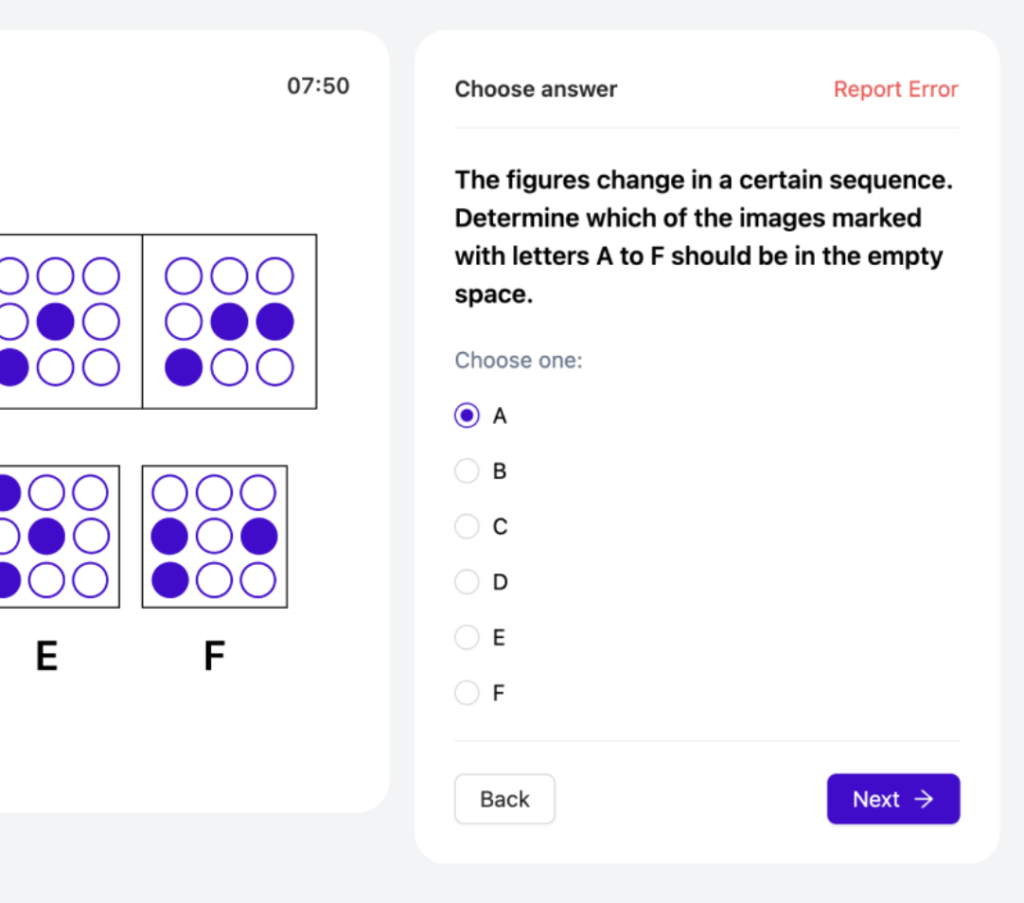
In today’s reasoning landscape, many schools direct parents toward electronic learning platforms as their go-to reasoning resource. On the surface, it seems like a great solution: sleek interface, automated feedback, and a huge bank of questions. But when we asked our own students, fresh from a reasoning workshop at Helen Grogan Tuition, we uncovered a very different story which indicated that electronic platforms should not be used as the only method by which to prepare for reasoning exams.
The value of in-person reasoning sessions.
We created our Reasoning Workshops because we believe children need more than just a screen and a score. They need clear teaching, structured repetition, and the chance to ask questions in real time.
In our sessions:
- We teach students how to tackle every single reasoning question type used by top London schools
- Every mistake becomes a teaching moment, not just a red X
- We guide children through questions step-by-step until they truly understand the logic
- And perhaps most importantly, students leave feeling more confident and more capable, not more confused
Identifying the correct approach
Electronic learning can be a useful supplement, but it’s not a replacement for targeted, in-person teaching. If your child is working hard and still feeling unsure, the issue may not be their effort. It might be the method.
Our reasoning workshops are built around clarity, precision, and individual growth. We’d love to welcome your child to one and show them just how rewarding reasoning can be when it’s taught the right way.
Thoughts from our pupils:
These children, many of whom use Atom Learning regularly at home or in school, had a lot to say. Here’s what we learned:
Please bear in mind that these quotes come directly from children and may be coloured by a degree of exaggeration or frustration. Their feedback points to consistent limitations that parents should be aware of:
“Twenty percent of the answers are wrong”
This was echoed by several students. They described situations where they had entered a correct answer, only for the computer to mark it as incorrect. In some cases, they’d input 0.3 and be told it was wrong because the “correct” answer was written as 0.30. The logic is identical, but the computer didn’t see it that way.
“It doesn’t explain how to do the question”
One of the most frustrating things for students is being told they’re wrong without being taught how to get it right. On a commonly used system, the feedback system gives “Help Sheets” or “Hints” but students described these as overly broad, offering general definitions rather than specific guidance for the question they just missed. For example, after getting a shape rotation question wrong, a student was directed to a page titled “2D shapes and properties”. Helpful? Not quite.
“It’s glitchy”
Students also mentioned instances where the programme marked their answer as incorrect, only to show the “correct” answer was exactly the same. These glitches, while small, chip away at trust. When you’re preparing for a high-stakes exam, you need to know your tools are accurate.
“The explanations don’t make sense”
Even when there is an explanation, it’s often not pitched at the right level. Students said they sometimes read the full answer breakdown and still didn’t understand how the platform got there. That’s not just unhelpful. It’s discouraging.
The one thing they did like: the mock tests
To be fair, our students agreed that computerised mock tests can be useful for pacing and exam stamina. But even then, they found themselves confused by the explanations, with no option to ask follow-up questions or see alternatives.